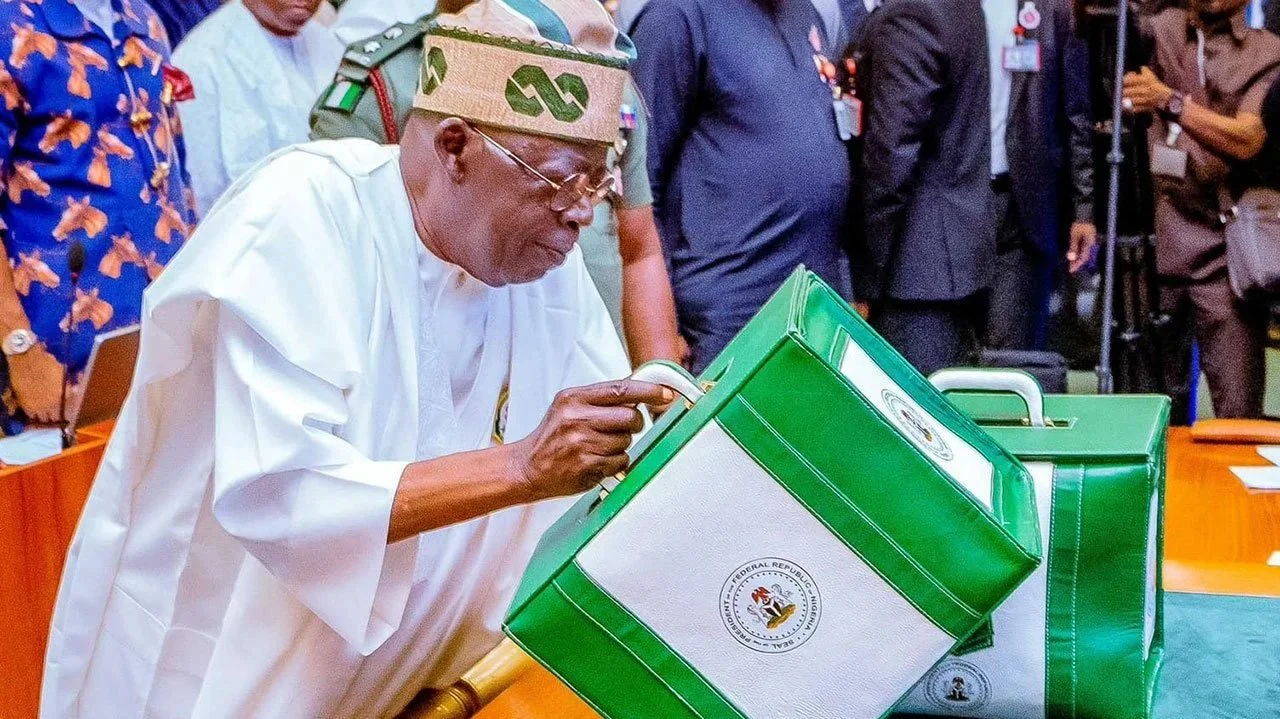


President Bola Tinubu on Wednesday presented the 2026 Appropriation Bill to a joint session of the National Assembly, proposing a record ₦58.18 trillion national budget titled the Budget of Accelerated Economic Recovery.
The proposed spending plan marks a significant increase over previous budgets and is designed to consolidate recent economic gains, stimulate inclusive growth, and address persistent challenges in security, infrastructure, and social services.
Key Fiscal Framework
The 2026 budget projects total revenue of ₦34.33 trillion, resulting in a fiscal deficit of ₦23.85 trillion, which represents 4.28 per cent of Gross Domestic Product (GDP).
Capital expenditure receives a major boost, with ₦26.08 trillion allocated to fund critical infrastructure projects and drive economic activity across key sectors.
The budget is based on the following macroeconomic assumptions:
- Crude oil benchmark: $84.85 per barrel
- Oil production target: 1.84 million barrels per day
- Exchange rate: ₦1,400 to the US dollar
- Inflation: 14.45 per cent as of November 2025
Sectoral Allocations
Spending priorities reflect the administration’s focus areas:
- Defence and security: ₦5.41 trillion, the largest single allocation, aimed at tackling insecurity and terrorism
- Infrastructure: ₦3.56 trillion
- Education: ₦3.52 trillion
- Health: ₦2.48 trillion
Strategic Focus and Reforms
The budget is structured around five core objectives:
- Sustaining macroeconomic stability
- Driving job creation and inclusive growth
- Strengthening human capital development and social protection
- Enhancing the business and investment climate
- Upholding fiscal discipline, transparency and value-for-money spending
Key reforms outlined include the digitisation of revenue collection and government services, stricter enforcement of procurement rules under a “Nigeria First” policy, expanded mechanisation support for farmers, and strengthened international partnerships in healthcare and social services.
A notable shift in revenue composition shows non-oil sources now contributing about two-thirds of total revenues, driven by corporate taxes, Value Added Tax (VAT), customs duties and independent revenues from government-owned enterprises, highlighting progress in economic diversification.
Implementation and Oversight
The administration has placed strong emphasis on effective execution, directing that priority be given to completing ongoing projects. Government-owned enterprises have been assigned ambitious revenue targets, while accountability, monitoring and results-based spending remain central to the fiscal strategy.
Lawmakers are expected to begin deliberations on the Appropriation Bill in the coming weeks, with passage anticipated early in 2026.
Overall, the proposed 2026 budget reflects the government’s resolve to sustain economic recovery amid global uncertainties while addressing the everyday needs of Nigerians through targeted investments in security, infrastructure, education, and healthcare.