


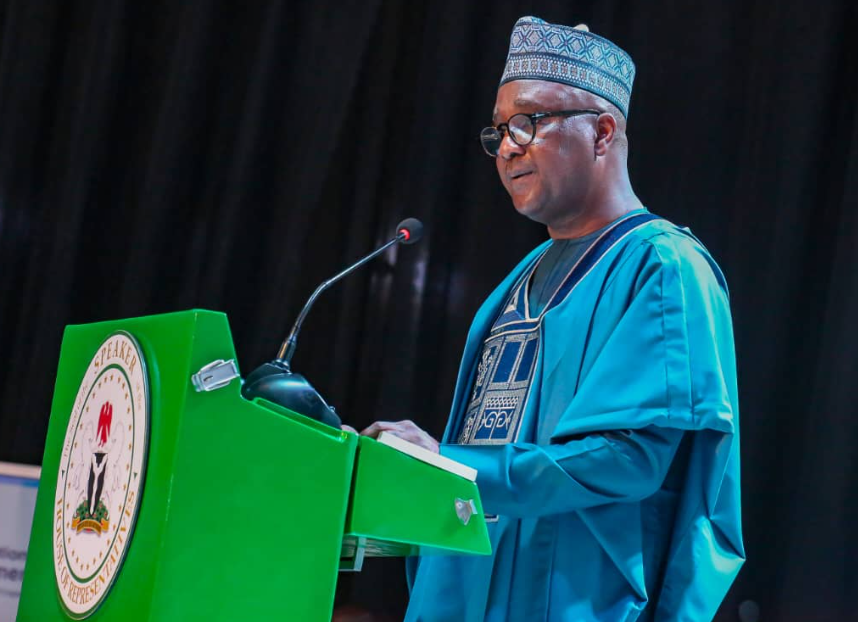
The Speaker of the House of Representatives, Abbas Tajudeen, has reaffirmed the National Assembly’s commitment to sustained tax reforms aimed at supporting Nigeria’s energy transition and climate-responsibility agenda.
Abbas made the statement on Monday at a one-day policy dialogue with lawmakers on taxation for a fossil-fuel phase-out, held in Lagos.
Nigeria, at COP26, pledged to achieve carbon neutrality by 2060 and subsequently launched its Energy Transition Plan to balance decarbonisation efforts with the country’s growing energy needs.
Represented by the Chairman of the House Committee on Media and Public Affairs, Akin Rotimi, Abbas said the transition to cleaner energy “remains a priority that cannot be deferred,” noting that Nigeria ranks among nations most vulnerable to climate change.
“Desertification, flooding, oil pollution, erosion, and biodiversity loss continue to pressure our environment, our food systems, and our livelihoods,” he said. “The legislative agenda of the People’s House affirms that climate responsibility and economic stability must advance together.”
He emphasised that Agenda 8 of the House Legislative Agenda underscores environmental sustainability, adding that the House is focused on strengthening the NSW Act, enforcing compliance with the Climate Change Act 2021, and reviewing the National Climate Change Policy and Response Strategy.
According to him, lawmakers are working to accelerate renewable-energy adoption, curb gas flaring, and support the restoration of communities impacted by industrial activities. He also reaffirmed the House’s commitment to tracking the implementation of Nigeria’s Energy Transition Plan.
Abbas stressed the pivotal role of tax policy in steering the nation toward a low-carbon economy.
“As the nation works towards a cleaner and more resilient energy future, fiscal policy sits at the centre of this transition,” he said. “Tax legislation can direct investments, encourage innovation, and discourage environmentally harmful practices.”
He noted that an effective fiscal framework would help expand renewable-energy deployment, widen access to clean technologies, and ensure an equitable distribution of the gains and costs of the transition.
He also highlighted the need to protect communities and workers who depend on traditional energy value chains, stressing that a shift to cleaner alternatives must create jobs and foster industrial growth.
Abbas commended the progress made under Nigeria’s ongoing tax reform agenda, which he said reflects a “significant shift” in governance.
“These reforms are not limited to technical adjustments,” he added. “They promote a more efficient, transparent, and investment-friendly tax environment that supports growth, equity, and long-term stability.”


