
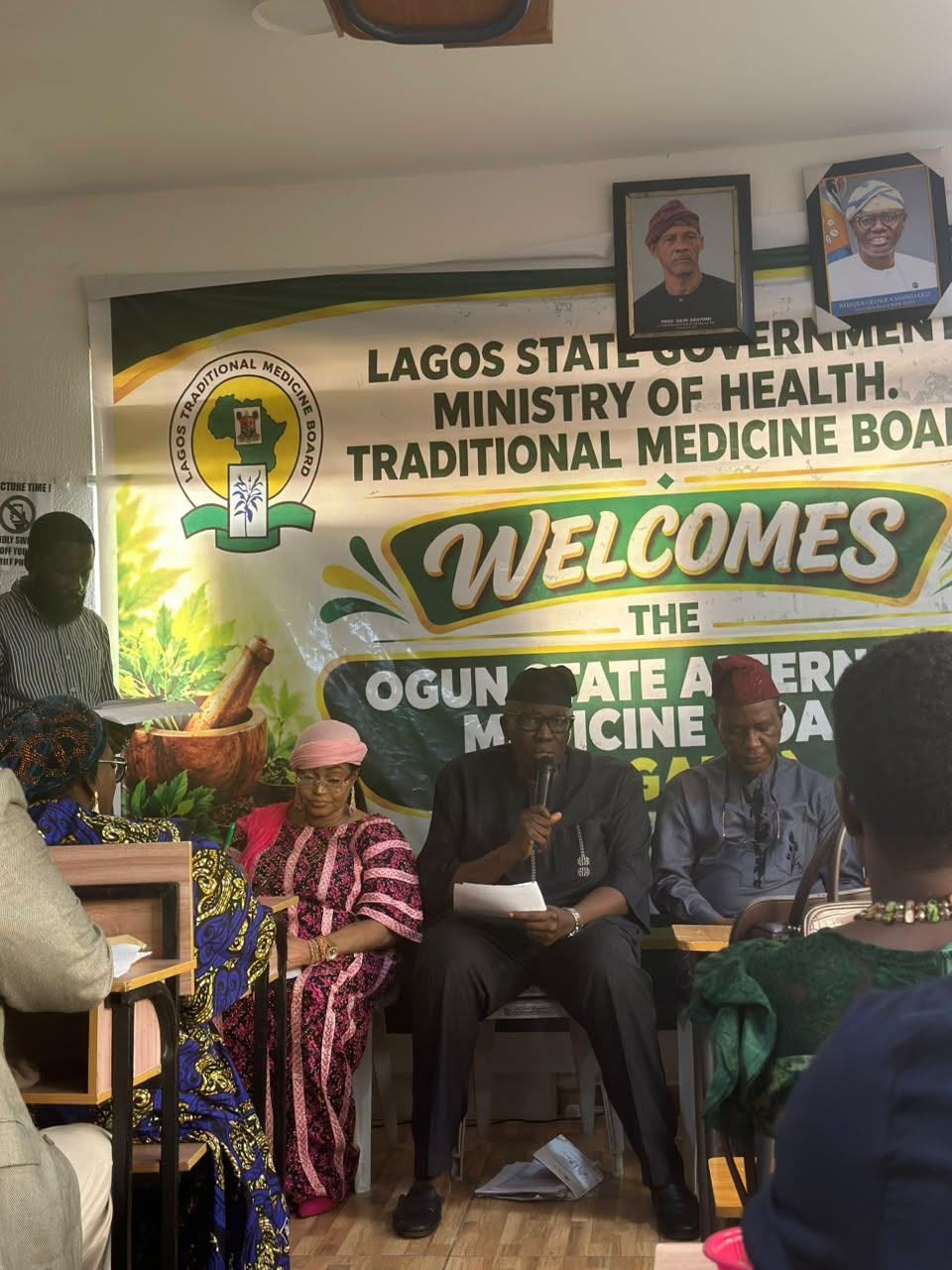
The Lagos and Ogun State governments are exploring stronger institutional collaboration to improve the regulation of traditional medicine, promote safe healthcare practices and preserve indigenous medical knowledge.
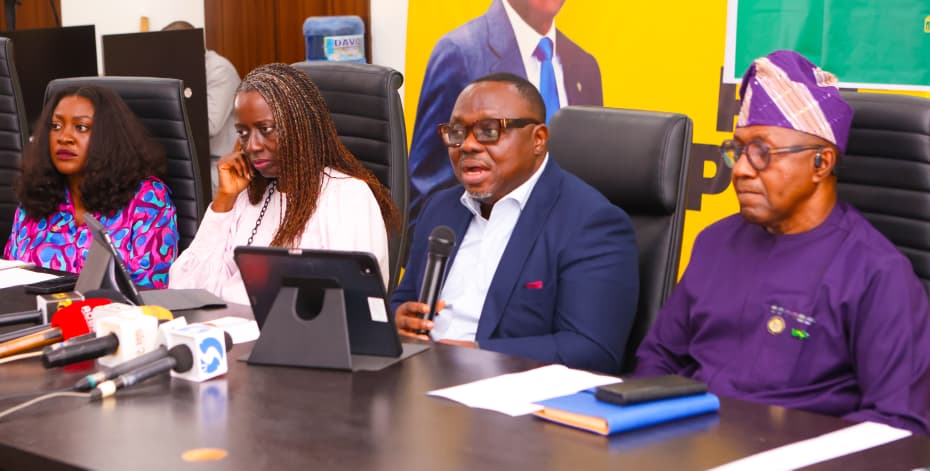
The proposed partnership emerged during a working visit by a delegation from the Ogun State Alternative Medicine Board to the Lagos State Traditional Medicine Board to study its regulatory framework, operations and strategies for effective administration.
Welcoming the delegation at its Lagos Island office, the Registrar and Chief Executive Officer of the Lagos Board, Babatunde Adele, said the agency was willing to share its experience and expertise to strengthen regulation and promote best practices in traditional medicine.
Adele disclosed that the Board, established in 1980, had registered 9,645 active traditional medicine practitioners. He explained that its responsibilities extended beyond registration to include professional development, monitoring and the promotion of responsible healthcare practices.
He said the Board had introduced regular training programmes and a code of conduct to improve professional standards, strengthen accountability and check the activities of unregulated operators.
Adele also highlighted plans to develop a botanical garden in Epe, establish additional traditional medicine clinics and laboratories, and create zonal offices to bring regulatory services closer to practitioners and the public.
Earlier, the Executive Secretary and Registrar of the Ogun State Alternative Medicine Board, Dr Charles Erinle, said the visit was aimed at gaining practical knowledge of Lagos’ administrative processes and regulatory strategies to improve the Ogun Board’s operations.
He commended the Lagos Board’s initiatives and expressed interest in identifying areas of cooperation and adopting approaches that could strengthen alternative medicine regulation in Ogun State.
Also speaking, a former member of the Lagos State Traditional Medicine Board and Chief Executive Officer of Royal Holistic College of Traditional Medicine, Dr Tajudeen Olusesi, highlighted the importance of training institutions, clinics, botanical gardens and herbal centres in developing organised traditional medicine practice.
He added that data management, practitioner registration and periodic licence renewal were important tools for improving regulatory oversight and identifying active practitioners.
In her vote of thanks, a member of the Ogun delegation, Mrs Olufunke Adu, appreciated the Lagos Board for sharing its institutional experience, assuring that the lessons learnt would support efforts to improve regulation in Ogun State.
The engagement is expected to strengthen cooperation between both states, promote professional standards and support the development of a more organised traditional medicine sector.