

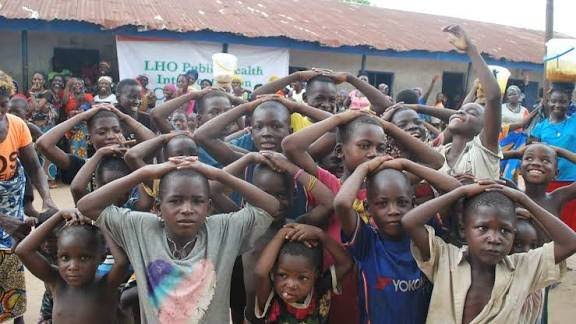
The Universal Basic Education Commission (UBEC) has raised the alarm that about 10 million Nigerian children are excluded from early childhood care, development and education, warning that the gap is worsening the country’s learning crisis
UBEC Executive Secretary, Dr Aisha Garba, disclosed this in Abuja at a three-day capacity-building workshop for state education officials on the use of early childhood care, development and education (ECCDE) standards and guidelines.
Garba, who was represented by UBEC Deputy Executive Secretary (Technical), Rasaq Akinyemi, said only 35.6 per cent of Nigerian children aged 36 to 59 months currently attend any form of early childhood education.
She said the gap was contributing to poor learning outcomes and developmental delays among children across the country.
According to Garba, analysis of the 2021 Multiple Indicator Cluster Survey showed that about 46 per cent of children aged 24 to 59 months were developmentally off track.
“Only 35.6 per cent of Nigerian children aged 36 to 59 months attend any form of early childhood education. That leaves roughly 10 million of our youngest children outside ECCDE altogether,” she said.
Garba also said about 70 per cent of Nigerian 10-year-olds could not read and understand a simple text, while only about 2.4 million of the 5.9 million children who enter primary school each year remain in the education system by the end of junior secondary school.
She said early childhood development should therefore be treated as a national priority rather than as a stand-alone education programme.
“There is no cheaper place in the education system to buy results,” Garba said, citing Nobel Laureate James Heckman’s estimate of about 13 per cent annual return per child on high-quality birth-to-five programmes.
The UBEC boss urged states to include ECCDE interventions in their State Matching Grant Action Plans, warning that programmes left out of the plans would not receive funding, procurement or monitoring attention.
“I must be blunt: what is not in the Action Plan will not be funded, will not be procured and will not be monitored,” she said.
Garba said the deadline for states to submit their ECCDE Action Plans for the next intervention year had been extended from September 30 to October 5, 2026.
She, however, warned that the extension should not be seen as an opportunity to delay, adding that plans submitted after October 5 would not be considered for the intervention year.
She also directed states to design ECCDE programmes around the needs of the whole child by working with health, nutrition, water and sanitation, women affairs, social welfare and Local Government Education Authorities.
Garba said the 2023–24 Nigeria Demographic and Health Survey put the national rate of stunting among children under five at 40 per cent, with rates ranging from 12 per cent in Rivers State to 65 per cent in Katsina State.
She said ECCDE centres must also meet essential standards covering child safety, supervision, safeguarding, food and water safety, structural safety and emergency exits.
The UBEC boss urged states to ensure children with disabilities and those living in hard-to-reach, nomadic, riverine and conflict-affected communities were not left out of ECCDE programmes.
She also called for stronger engagement with parents, caregivers, School-Based Management Committees, traditional institutions and religious bodies, saying communities could help reach children who could not easily access conventional classrooms.
Earlier, Acting Director of UBEC’s Department of Special Programmes and Early Childhood, Dr Chijioke Onwuzurike, said Nigeria currently had more than 45 early childhood development delivery channels across the health, nutrition, education, agriculture and social protection sectors.
Onwuzurike said the commission expected every state, within the next 18 months, to map and streamline its existing early childhood development platforms, establish functional multi-sectoral coordination mechanisms and strengthen frontline workers’ capacity for screening and follow-up.
“School readiness is not something that begins at the primary school gate; by the time a child reaches that gate, it is largely decided,” he said.
Also speaking, UNICEF Nigeria Education Specialist, Yetunde Oluwatosin, said early childhood development was critical to tackling Nigeria’s out-of-school problem.
She compared early childhood development to laying the foundation of a building, saying a strong foundation would help children start school at the right age, remain in school and progress through the education system.
Oluwatosin said UNICEF had supported the Federal Government in developing the ECCD policy, minimum standards and curriculum, adding that the documents were benchmarked against global standards.
The three-day workshop, organised by UBEC’s Department of Special Programmes and Early Childhood in collaboration with UNICEF, brought together state education officials and other relevant stakeholders, including SUBEB Directors of Special Programmes, ECCDE Desk Officers and UBEC officials.
The workshop is aimed at strengthening state-level capacity for ECCDE planning, financing, implementation, monitoring, data management and community engagement, while helping participating states develop or strengthen state-specific ECCDE and early childhood development work plans.