


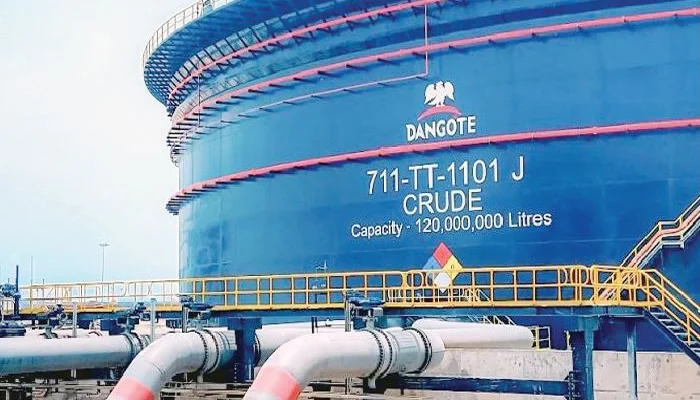
The Nigerian National Petroleum Company Limited (NNPC Ltd) has significantly increased crude oil supply to the Dangote Oil and Gas Company Limited in April 2026, delivering over 1.03 million metric tonnes—equivalent to about 6.8 million barrels or 1.08 billion litres—within the month.
Data obtained from tanker vessel movements shows that the deliveries were executed through eight crude cargoes handled by NNPC Trading, reinforcing its role as a key feedstock supplier to the 650,000 barrels-per-day Dangote refinery.
The crude shipments, sourced from major Nigerian oil grades including Anyala, Bonga, Odudu, Forcados, Qua Iboe, and Utapate, were transported via the refinery’s Single Point Mooring systems, SPM-C1 and SPM-C2.
Out of the eight cargoes recorded, five have already been fully discharged, while three remain in transit or awaiting completion of discharge operations, indicating a continuous supply flow into the refinery.
Despite this steady supply, the refinery has previously raised concerns over feedstock adequacy, stating a monthly requirement of about 19 cargoes. This comes against the backdrop of Nigeria importing over 55 million barrels of crude in the first two months of 2026.
Key deliveries included vessels such as Sonangol Kalandula, Advantage Spring, Barbarosa, Sonangol Njinga Mban, and Nordic Tellus, which collectively transported over 600,000 metric tonnes of crude from various Nigerian oil streams.
Additional cargoes are still pending discharge, including shipments from Utapate and Qua Iboe fields, highlighting ongoing operations to maintain refinery throughput.
Beyond crude oil, the Dangote refinery also received multiple imports of refined products and blending components from international suppliers across the UK, France, Norway, Togo, the Netherlands, Belgium, Singapore, the United States, and Cameroon.
These include Premium Motor Spirit (PMS), naphtha, gasoline blendstock, and residue catalytic oil—essential inputs for refining and fuel production.
Domestic and international traders also contributed additional crude cargoes, further strengthening refinery feedstock availability and operational stability.
Industry analysts describe the sustained inflow as a reflection of stronger coordination between local crude producers and downstream refining operations aimed at boosting domestic fuel supply and reducing import dependency.