

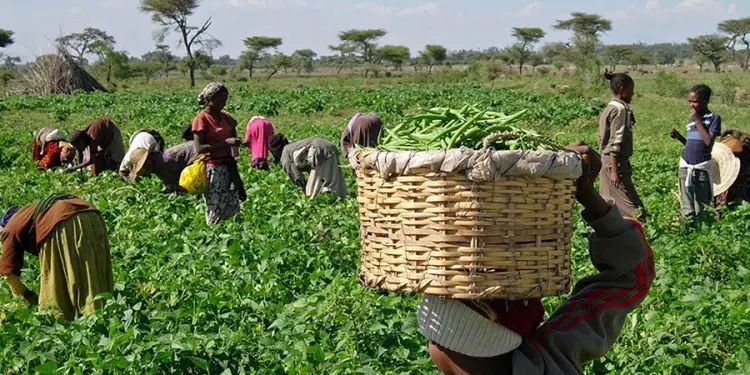
Concerns over Nigeria’s agricultural financing system took centre stage at the 2026 Agriculture and Agro-Allied Summit in Lagos, as farmers accused financial institutions of diverting funds meant for agricultural development into the real estate sector.
Speaking at the summit organised by the Nigerian-British Chamber of Commerce, former Chairman of the Agriculture and Non-Oil Group of the Lagos Chamber of Commerce and Industry, Wale Oyekoya, alleged that the diversion of agric intervention funds has worsened the financing challenges facing farmers across the country.
Oyekoya, who is also the Managing Director of Bama Farms Limited, said government agencies already possess adequate data on genuine farmers through registered cooperatives and farming clusters, stressing that poor implementation and weak financial commitment remain major obstacles to agricultural growth.
According to him, many banks fail to channel intervention funds to farmers, choosing instead to invest in more profitable sectors such as real estate.
Responding to the claims, Utomi Ezinwa of Union Bank Nigeria acknowledged that access to finance remains difficult for smallholder farmers, largely due to risks associated with fragmented farming systems. He noted that lenders are more willing to support farmers operating through cooperatives or anchored market structures.
The summit, themed “Ensuring Food Security in Nigeria: Innovations, Investments and Policy for a Resilient Future,”also featured concerns over insecurity, climate shocks, youth unemployment, and rising food prices affecting Nigeria’s agricultural sector.
Founder of Babban Gona, Kola Masha, warned that Nigeria’s food security crisis could worsen unless investments in agriculture and rural youth empowerment are urgently expanded.
Masha highlighted Nigeria’s vast agricultural potential but lamented that millions of smallholder farmers still lack access to finance, technology, and reliable markets.