

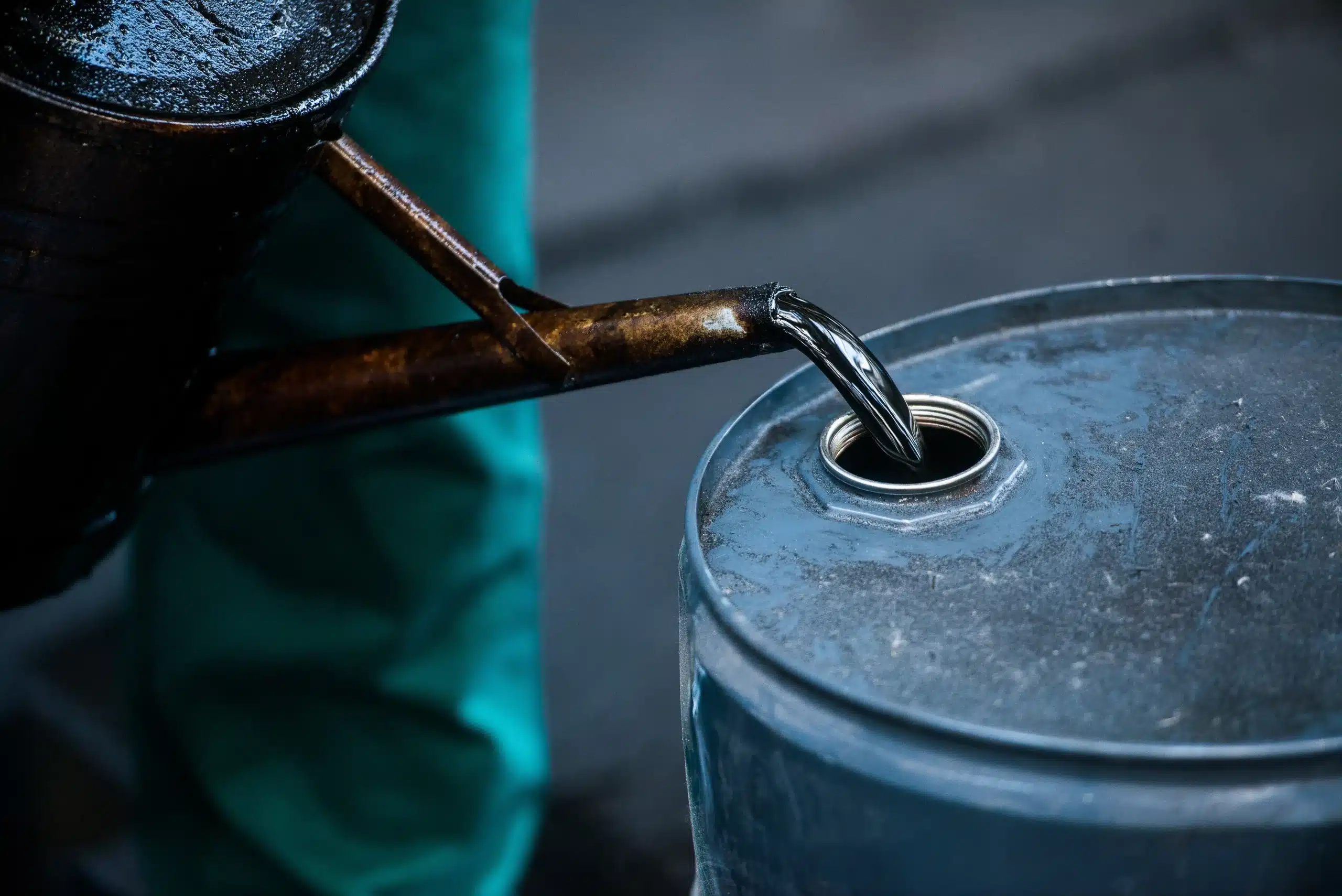
Nigeria’s gross profit from crude oil and gas sales fell sharply by 43.3 per cent (₦824.66 billion) in 2024, despite an uptick in crude production, according to the Budget Implementation Report for Q4 2024 released by the Budget Office of the Federation.
The report showed that gross profit from crude and gas sales dropped to ₦1.08 trillion in 2024 from ₦1.90 trillion the previous year, falling 26.3 per cent below the government’s budgeted projection of ₦1.46 trillion.
The decline highlights the continued weakness of Nigeria’s petroleum earnings despite reforms under the Petroleum Industry Act (PIA) and efforts to raise output.
Weaker Crude Sales, Stronger Royalties
Total oil and gas revenue before deductions stood at ₦15.07 trillion, compared to a budget target of ₦19.99 trillion, a shortfall of ₦4.93 trillion (24.7%).
However, compared with ₦8.36 trillion realised in 2023, total inflows nearly doubled — an 80.3 per cent increase — driven largely by higher receipts from royalties, taxes, penalties, and exchange-rate gains, rather than from increased crude exports.
Crude output fluctuated between 1.4 and 1.6 million barrels per day, below the 1.78 million bpd benchmark used in the 2024 budget, contributing to the shortfall in gross profit.
Oil royalties surged by 179.7 per cent, rising from ₦2.50 trillion in 2023 to ₦6.99 trillion in 2024, as regulators tightened compliance and integrated marginal-field operators under the PIA. Petroleum Profit Tax and Company Income Tax from gas operations added another ₦6.00 trillion, accounting for nearly 40 per cent of oil-sector inflows.
Exchange-Rate Gains Mask Weak Fundamentals
A key driver of apparent revenue growth was the ₦4.24 trillion earned from exchange-rate gains, up 435 per cent from ₦791.9 billion in 2023.
This followed the naira’s sharp depreciation after the government unified exchange rates in mid-2024, boosting the local-currency value of dollar-denominated oil receipts.
After all deductions, net oil revenue for 2024 stood at ₦12.95 trillion, short of the ₦16.98 trillion budget target but up 168.8 per cent from ₦4.82 trillion in 2023.
Analysts, however, warn that the improvement was largely nominal. “Most of the increase came from currency revaluation rather than higher production or exports,” The PUNCH observed.
Production Shows Modest Recovery
Data from the Nigerian Upstream Petroleum Regulatory Commission (NUPRC) showed that crude production rose to 442.21 million barrels in 2024, up 12.6 per cent from 392.66 million barrels in 2023.
Average daily output increased to 1.43 million barrels per day, compared with 1.27 million bpd the year before.
Officials attributed the modest rebound to reduced vandalism, improved joint-venture coordination, and new production from marginal fields licensed under the PIA.
Total liquids (crude plus condensates) climbed to 492.34 million barrels, up 9.1 per cent year-on-year, with crude accounting for 89.8 per cent of the total.
Despite the gains, output remains well below OPEC allocations and Nigeria’s own fiscal targets, raising concerns over the sustainability of oil-dependent revenues heading into 2025.